
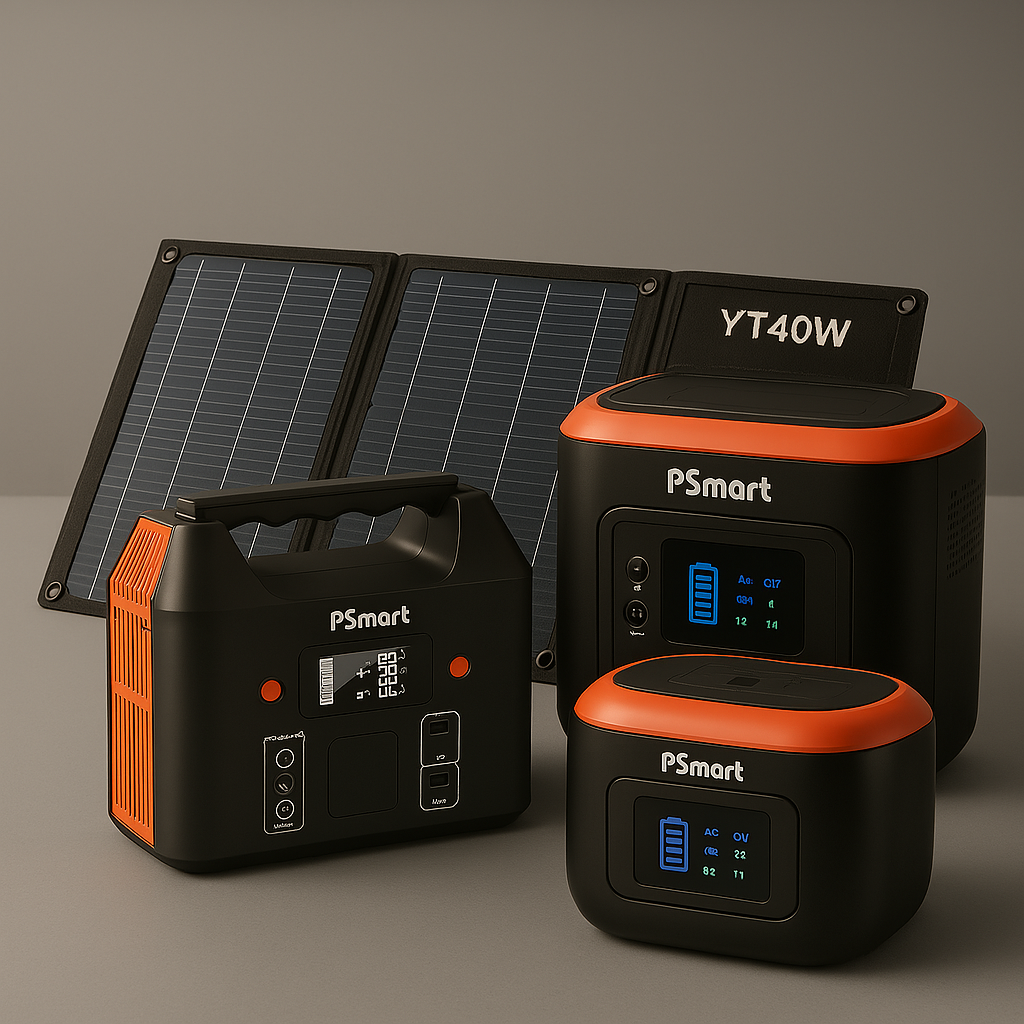
Portable power stations are useful when customers need backup power for communication, lighting, remote work, security devices, small care equipment or selected home essentials. The key is to match the product to the real load, not just the headline capacity.
Understand capacity and output
Capacity is usually shown in watt-hours. It tells you roughly how much energy the battery can store. Output is shown in watts. It tells you how much power the station can deliver at one time. A product can have enough stored energy but still be unsuitable for a load if the load requires more output than the power station can provide.
AfriSmartHome listings should help customers check both values. For example, a router and LED lamp may be a good match for a smaller station, while refrigeration, power tools or compressor loads need careful surge verification.
Start with the appliances that matter most
Before choosing a model, list the items that must stay on during an outage. Common essentials include router or ONT, mobile phones, LED lamps, laptop, camera system, small fan, CPAP without heated humidifier, and selected low-power care equipment. Add the approximate wattage for each item and estimate the hours of use required.
Match the solar panel properly
Solar input has voltage and wattage limits. A solar panel should match the input range of the power station. Bigger is not automatically better if the panel exceeds the station’s allowed input. AfriSmartHome product listings and support should help customers choose a panel that is compatible with the power station model.
Plan for safety and realistic runtime
Runtime estimates should be treated as planning guides. Actual runtime depends on appliance power, inverter losses, battery condition, temperature and charging habits. Customers should avoid using portable power stations for life-critical equipment without a care plan and backup arrangement.
Where the DPS and R Series fit
The Pemsmart DPS Series is useful for customers who need compact home essentials backup, communication support and light everyday power. The R Series supports larger runtime and heavier use cases depending on the specific model. AfriSmartHome’s role is to help customers and partners match the model to the load, the budget and the local support route.
Next step: compare the portable power products in the shop, then contact support if you need help checking appliance wattage, runtime or solar panel compatibility.