
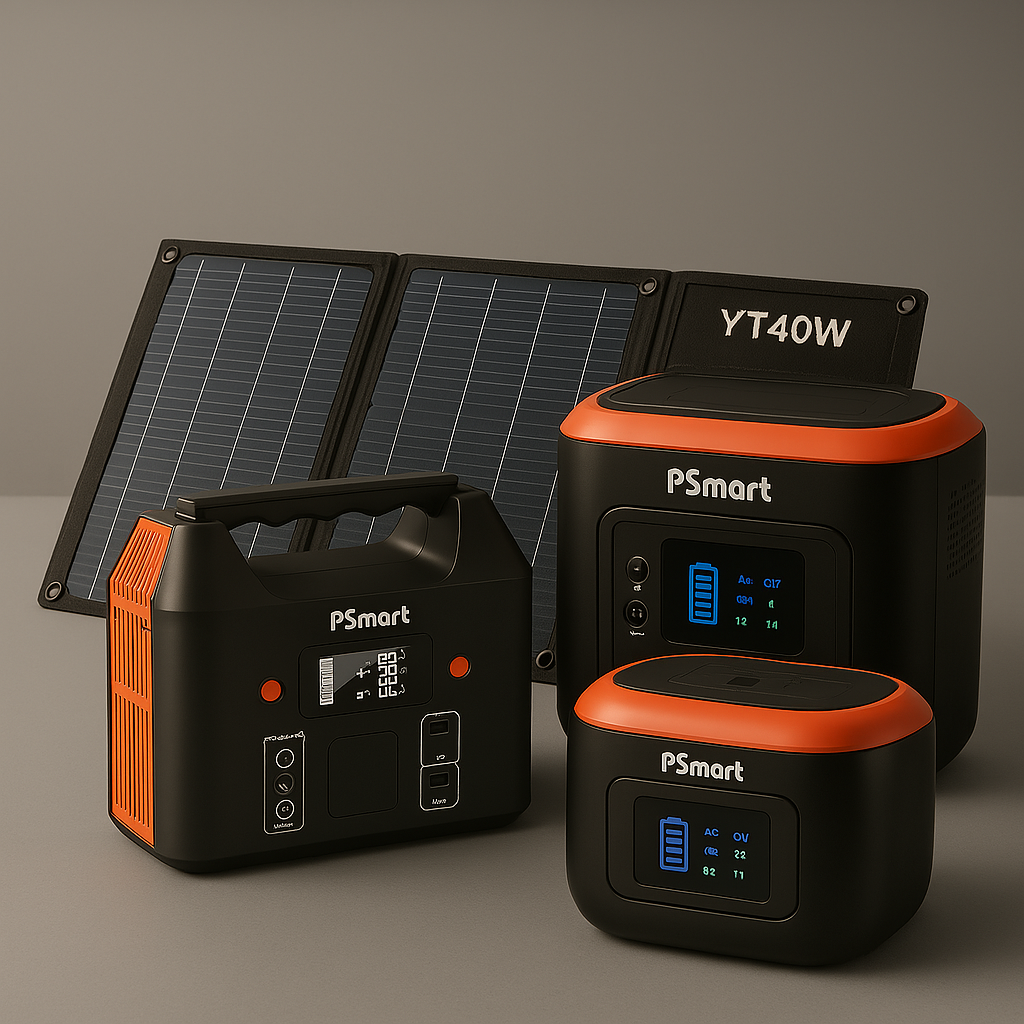
Choosing a portable power station is easier when you compare two numbers together: battery capacity in watt-hours and AC output in watts. Capacity tells you the approximate energy available for runtime. Output tells you the size of appliances the unit can support at one time.
This AfriSmartHome guide uses the Pemsmart DPS Series and R Series buyer guides to help customers, installers, B2B partners and franchise stores explain the difference in practical language.
Quick answer
Choose a smaller DPS or R Series model for communication, lights, laptops and short backup. Choose larger DPS or R Series models when you need longer runtime, selected appliance support or a larger essential-load bundle. Always check both running watts and startup surge before connecting fridges, freezers, pumps, compressors or medical equipment.
Capacity and output: the two numbers that matter
| Term | What it means | Why it matters |
|---|---|---|
| Wh capacity | Stored battery energy | Higher Wh usually means longer runtime. |
| W output | Maximum AC power available at one time | The connected load must stay within the output rating. |
| Startup surge | Short power spike when motors start | Fridges, freezers, pumps and compressors may need more power at startup than while running. |
| Usable energy | Energy available after conversion losses | Runtime estimates in the buyer guides use an indicative 85% usable-energy assumption. |
DPS Series positioning
The DPS Series is a strong fit for structured home emergency backup because the range steps from pocket-size backup to high-output, high-capacity power stations. It is useful when customers want a clear ladder from small essentials to larger selected-load backup.
| Model | Capacity | AC output | Best buyer fit | Main caution |
|---|---|---|---|---|
| PD-100LS | 74 Wh | 100 W | Pocket USB-C backup | USB-C/USB loads only; no household AC appliance support. |
| DPS-150D | 96 Wh | 150 W | Compact AC emergency backup | Small loads only; avoid compressors, kettles, heaters, microwaves and pumps. |
| DPS-350D | 298 Wh | 350 W | Small home essentials | Good for small electronics; compressor loads need surge verification. |
| DPS-700S | 672 Wh | 700 W | Medium home backup | High-starting-current loads need caution. |
| DPS-1200 | 960 Wh | 1200 W | Large portable home backup | Check surge and total connected load. |
| DPS-2400 | 2662 Wh | 2400 W | High-capacity home backup | Not a substitute for fixed wiring or hospital-grade emergency power. |
| DPS-3600 | 2662 Wh | 3600 W | High-power home backup | High output, but energy and surge still need management. |
| DPS-6000 | 6093 Wh | 6000 W | Whole-home essentials / extended backup | Still needs proper load planning and competent electrical review for fixed wiring. |
R Series positioning
The R Series is useful for customers who want a simple progression from personal backup to larger household essentials. The R models are especially easy to explain in terms of lifestyle and outage duration.
| Model | Capacity | AC output | Best buyer fit | Typical role |
|---|---|---|---|---|
| H11 | 20,000 mAh | No household AC outlet | Vehicle owner | Roadside jump starter, tyre inflation and emergency light. |
| R150 | 99 Wh | 150 W | Individual, student or traveller | Short backup for router, phones, LED lighting and a laptop. |
| R300 | 296 Wh | 300 W | Small household | Short outage support for communications, lights, laptop, fan or CPAP. |
| R600 | 500 Wh | 600 W | Small to medium household | Core emergency loads, including a compatible efficient fridge. |
| R1000 | 737 Wh | 1000 W | Household needing longer support | Longer essential-load bundle and selected appliances. |
| R2000-1728Wh | 1728 Wh | 2000 W | Family or larger emergency bundle | Extended backup for food storage, communications, lighting and selected electronics. |
How to choose between DPS and R Series
- For phones, router, LED lighting and short laptop use: start with DPS-150D, DPS-350D, R150 or R300 depending on the runtime required.
- For a small household essentials bundle: compare DPS-350D, DPS-700S, R300 and R600, then check total connected watts.
- For longer outage readiness: compare DPS-700S, DPS-1200, R600 and R1000.
- For larger essential-load bundles: compare DPS-2400, DPS-3600, DPS-6000 and R2000-1728Wh.
- For roadside support: H11 is a vehicle emergency product, not a 230 V household backup station.
Runtime examples should be treated as estimates
The buyer guides use an indicative formula: stated capacity x 85% usable energy divided by the load in watts. This is useful for comparing models, but it is not a guarantee. Actual runtime depends on appliance duty cycle, inverter losses, temperature, battery state of charge, battery age and how the appliance behaves in real use.
| Example load | Planning note |
|---|---|
| Router or ONT | Often a good match for smaller units, especially when combined with a small LED lamp. |
| Laptop and phones | Good for remote work planning; check charger wattage. |
| CPAP without heated humidifier | May be possible on selected models, but medical-device use needs extra care and device-specific checks. |
| Efficient fridge or freezer | Check average running watts and startup surge before purchase. |
| Pumps, kettles, heaters and microwaves | Often unsuitable for smaller models and may be poor use of stored battery energy. |
Safety boundary
Portable power stations are designed to power selected plug-in loads through their approved output sockets. Do not backfeed a wall socket, ring circuit or consumer unit using improvised leads. Fixed wiring, automatic switchover, essential-circuit backup, medical equipment, pumps, oxygen equipment and high-power appliances require competent electrical review.
An automatic transfer switch or PDU can make selected plug-in backup smoother, but automatic does not always mean no-break. Sensitive electronics, network storage, CCTV recorders and medical devices may still need a suitable UPS layer or device battery where no-break continuity is required.
AfriSmartHome recommendation
Start with the appliances you want to support, write down their watts, decide the runtime you need and then choose a model that satisfies both capacity and output. If the load includes refrigeration, pumps, compressors or medical equipment, ask for compatibility support before purchase.
Next step: browse the portable power products in the AfriSmartHome shop or contact support with your appliance list so the team can help you match the right Pemsmart DPS or R Series model.